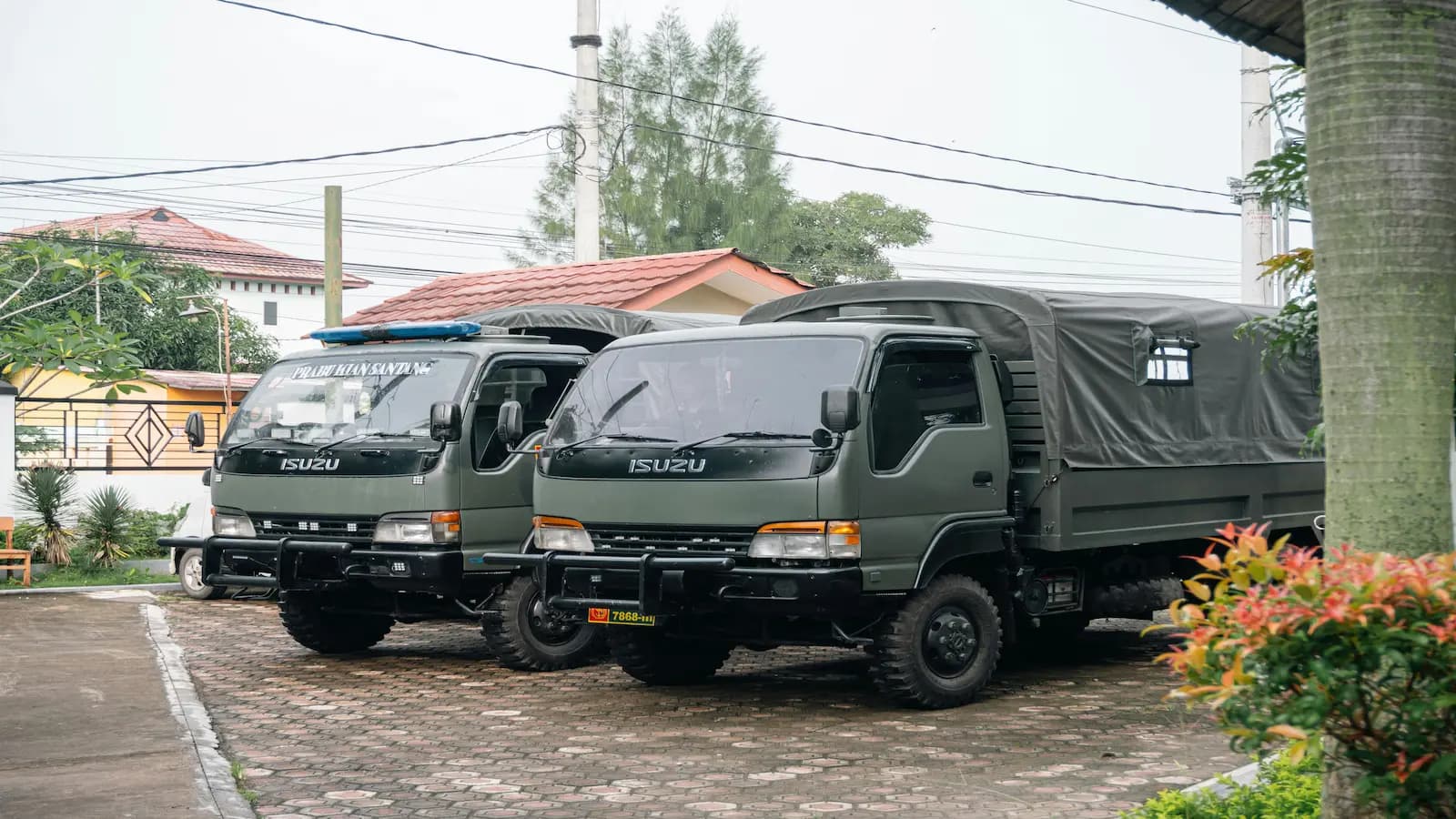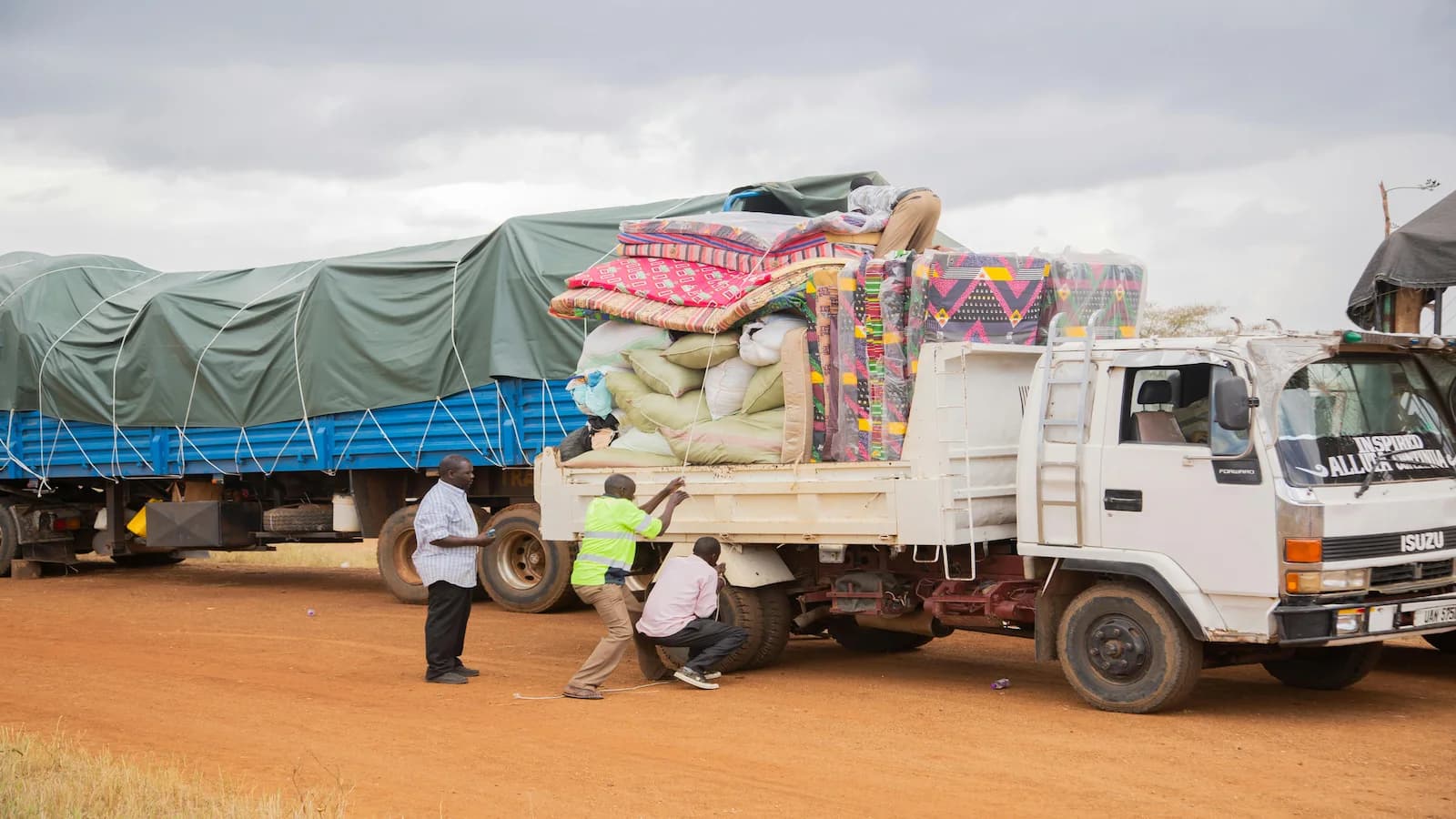
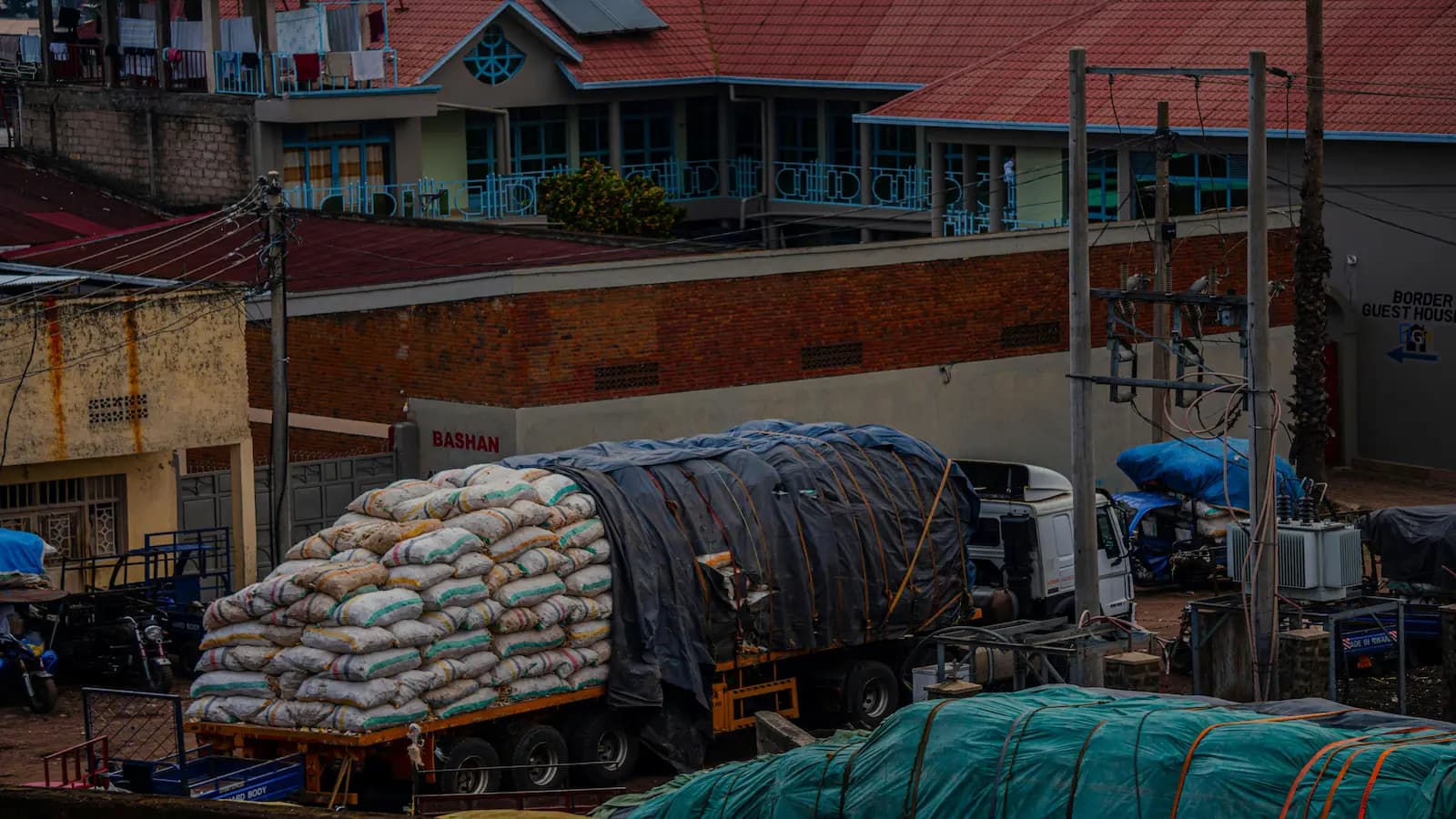
That routine is dying. In its place: on-demand trucking. Open an app or send a WhatsApp. See the truck and driver. Watch them arrive within 30 minutes. Track the trip in real time. Get a digital proof of delivery and a clean invoice. The same way Kigali learned to expect 30-minute ride-hailing and 1-hour food delivery, businesses are now expecting on-demand logistics — and the businesses adopting it first are winning the operational advantage.
This is a guide to on-demand trucking in Kigali in 2026: what it is, who it's for, how it actually works, and why it's spreading faster than anyone expected.
What on-demand trucking actually means
On-demand trucking is the logistics version of ride-hailing. You don't book a specific truck from a specific owner days in advance. Instead, you describe what you need to move, and a platform matches you instantly with the nearest available, suitably-sized, vetted truck and driver. Pickup is dispatched within minutes. Pricing is calculated upfront. The trip is tracked end-to-end.
In Rwanda, the gold standard is 30 minutes from booking to dispatch for standard trucks in Kigali. Most on-demand bookings complete within an hour of the original call.
The model only works because of three enabling shifts:
- Mobile phone penetration. About 85% of Rwandan households own a mobile phone, which gives platforms a way to reach drivers and customers everywhere.
- GPS tracking. Real-time vehicle location enables dispatch, ETAs, and customer transparency.
- Vetted driver networks. Aggregated, background-checked, rated drivers replace fragmented one-off operators.
These shifts have been happening for years. They've now reached the threshold where on-demand trucking is not just possible — it's the default for anyone who values their time.
Who benefits most from on-demand trucking in Kigali?
Almost every business that doesn't run its own daily distribution route. Concretely:
SMEs and traders. A shop owner restocking from Nyabugogo Market. A boutique receiving a wholesale delivery. A trader moving goods between two markets. On-demand cuts hours of waiting and call-around per week.
Restaurants and FMCG retailers. Same-day supplier deliveries. Pop-up event logistics. Emergency replenishment.
Construction and contractors. Site material deliveries that depend on tasks completing. Tools and equipment moves between sites. Sand, cement, gravel runs.
E-commerce sellers. Particularly important. Rwanda's e-commerce market is forecast to hit USD 373.7 million in 2025 and reach USD 937 million by 2029. That growth is built on reliable, fast, traceable shipping — exactly what on-demand provides.
Manufacturers and distributors. For emergency replenishment, promotional surges, or one-off product launches that exceed normal scheduled capacity.
Event organisers. Conference equipment, exhibition stands, hospitality supplies — everything time-sensitive and location-flexible.
Individuals. Moving house, transporting furniture, hauling a single bulky item across town. The same platform serves businesses and individuals.
If your business calls a truck more than once a week and doesn't have a dedicated logistics team, on-demand will save you both money and hours.
Why on-demand beats the old model
The old model — calling individual truck owners and negotiating each trip — has six structural problems on-demand solves:
1. Discovery cost. Old model: hours of calling around for availability and price. On-demand: 30 seconds in an app.
2. Price uncertainty. Old: verbal estimates that often change. On-demand: confirmed price upfront, in writing.
3. Trust. Old: you don't know the driver, the truck condition, or whether they'll show up. On-demand: vetted network with ratings.
4. Visibility. Old: "I think the truck is on the way." On-demand: live GPS, real-time ETA.
5. Documentation. Old: cash payment, no invoice. On-demand: digital proof of delivery, proper invoice, payment by your preferred method.
6. Scale. Old: each new trip is a fresh negotiation. On-demand: book your 1st or your 100th trip the same way.
The cost of switching to on-demand isn't financial — the unit price is often similar. The win is operational: time back, predictability, and confidence in your supply chain.
What 30-minute dispatch actually requires
Promising 30 minutes is easy. Delivering it consistently across Kigali requires:
- Driver density. Enough drivers across enough of the city that one is always near any pickup point. This is the hardest thing to build; new platforms struggle to deliver it.
- Smart matching. Algorithms that route requests to the right driver based on truck size, location, current load, and historical reliability.
- Driver app discipline. Drivers logging on and off accurately, accepting matches, communicating delays.
- Customer-side clarity. Pickup location, cargo description, and access details have to be accurate. "Behind the second yellow gate" doesn't fit in an address field.
- Backup capacity. A standby plan for peak hours, rainy days, holiday spikes.
A 30-minute SLA without all five is just marketing. Ask any platform you're evaluating to show their on-time dispatch rate over the last 30 days — not the best-case scenario.
On-demand pricing: what to expect
Pricing for on-demand trucks in Kigali is influenced by:
- Truck size. Cargo van to 20-tonne — each size has a base rate.
- Distance. Kilometre-based, with minimum trip charges.
- Time of day. Peak hours and after-hours can carry small surcharges; off-peak is cheapest.
- Cargo type. Standard goods cheapest; fragile, oversized, or temperature-controlled more.
- Loading time. Built into the base; excessive wait time may add a charge.
The big win with on-demand isn't unit price (which is similar to the old market) — it's that you're not paying for discovery cost, idle time, or risk. That's where the savings actually compound for active businesses.
Get a real-time quote for your trip at ironji.com/quote. If the number surprises you (in either direction), at least you know it before the truck moves.
Real scenarios on-demand handles every day in Kigali
To make this concrete, here are common situations on-demand handles in a typical week:
- A boutique owner in Kacyiru gets a wholesale delivery to Nyabugogo and needs a small truck to bring it to her shop today.
- An event organiser needs three trips moving conference equipment from a warehouse in Gikondo to a venue in Kiyovu over four hours.
- An e-commerce seller has 30 customer orders to dispatch across Kigali and surrounding suburbs by end of day.
- A restaurant owner runs out of beverages during a peak weekend and needs an emergency restock from the distributor.
- A construction contractor needs gravel delivered to a site in Bumbogo this afternoon — three trips.
- A family relocating from Kicukiro to Kanombe needs a 5-tonne truck for two hours on Saturday morning.
- A factory in KSEZ needs to send finished goods to a regional warehouse in Rubavu by end of week.
All of these get handled by the same platform, with the same predictable experience.
How on-demand fits with scheduled distribution
On-demand isn't a replacement for scheduled distribution programmes — it's a complement.
If you're an FMCG distributor, your weekly routes still want to be planned. But when a retailer calls in an emergency Friday afternoon order, or a new account onboards mid-week, or a promotion sells through faster than you forecast, on-demand fills the gap without forcing your scheduled programme out of shape. The best operators use both, with on-demand quietly absorbing the variability that breaks rigid schedules.
For inter-warehouse moves, same thing: scheduled lanes for the baseline, on-demand for peak-week top-ups. (See our guide on inter-warehouse transport at ironji.com/services/inter-warehouse for the full pattern.)
How to book your first on-demand truck
Three steps with Ironji:
1. Tell us what you need. Pickup location, destination, cargo description, truck size, time. Use ironji.com/request-truck or message us on WhatsApp at +250 783 889 601.
2. Get matched. Within 30 minutes (often faster) you'll see your assigned truck, driver, and live ETA.
3. Track and deliver. Watch the trip in real time. Get digital proof of delivery. Pay via invoice.
That's it. First trip and 1,000th trip look exactly the same.
Frequently asked questions about on-demand trucking in Kigali
How fast can I get a truck on demand in Kigali?
Standard cargo trucks dispatch within 30 minutes through Ironji's on-demand service. Specialised vehicles (refrigerated, oversized) may need 1–2 days notice.
Is on-demand trucking more expensive than booking in advance?
Per-kilometre rates are similar. On-demand often saves you money overall because you stop wasting time on discovery and avoid the cost of unreliable delivery.
Can I use on-demand trucking outside Kigali?
Yes. Ironji's on-demand network covers all 30 districts of Rwanda. Density is highest in Kigali; expect slightly longer match times in remote rural areas.
Are on-demand drivers vetted?
Yes — through Ironji. Every driver is background-checked, license-verified, trained on handling and customer-facing conduct, and continuously rated by customers.
What if my truck doesn't arrive on time?
With Ironji you'll always see the live ETA. If a driver is running late, dispatch will assign a backup. If you ever feel a trip isn't being handled properly, call our team at +250 783 889 601.
Can I book on-demand trucks at night or on weekends?
Yes. On-demand operates 24/7, though after-hours and weekend slots may carry small surcharges and slightly longer match times.
Do I need to pay in cash for on-demand trucking?
No. Ironji bills via invoice with multiple payment options. You don't need cash on hand for the driver.