
We're changing that. Not by publishing a fixed rate card (any company that does is either lying or about to lose money), but by being completely honest about what drives the cost and how you should think about pricing for your business.
This is a transparent guide to trucking and freight costs in Rwanda in 2026. Read it, and you'll know how to read any quote you're given — and how to know whether it's fair.
The six things that actually determine your price
Every trucking quote in Rwanda is built from the same six inputs. Understand these and you understand pricing.
1. Truck size
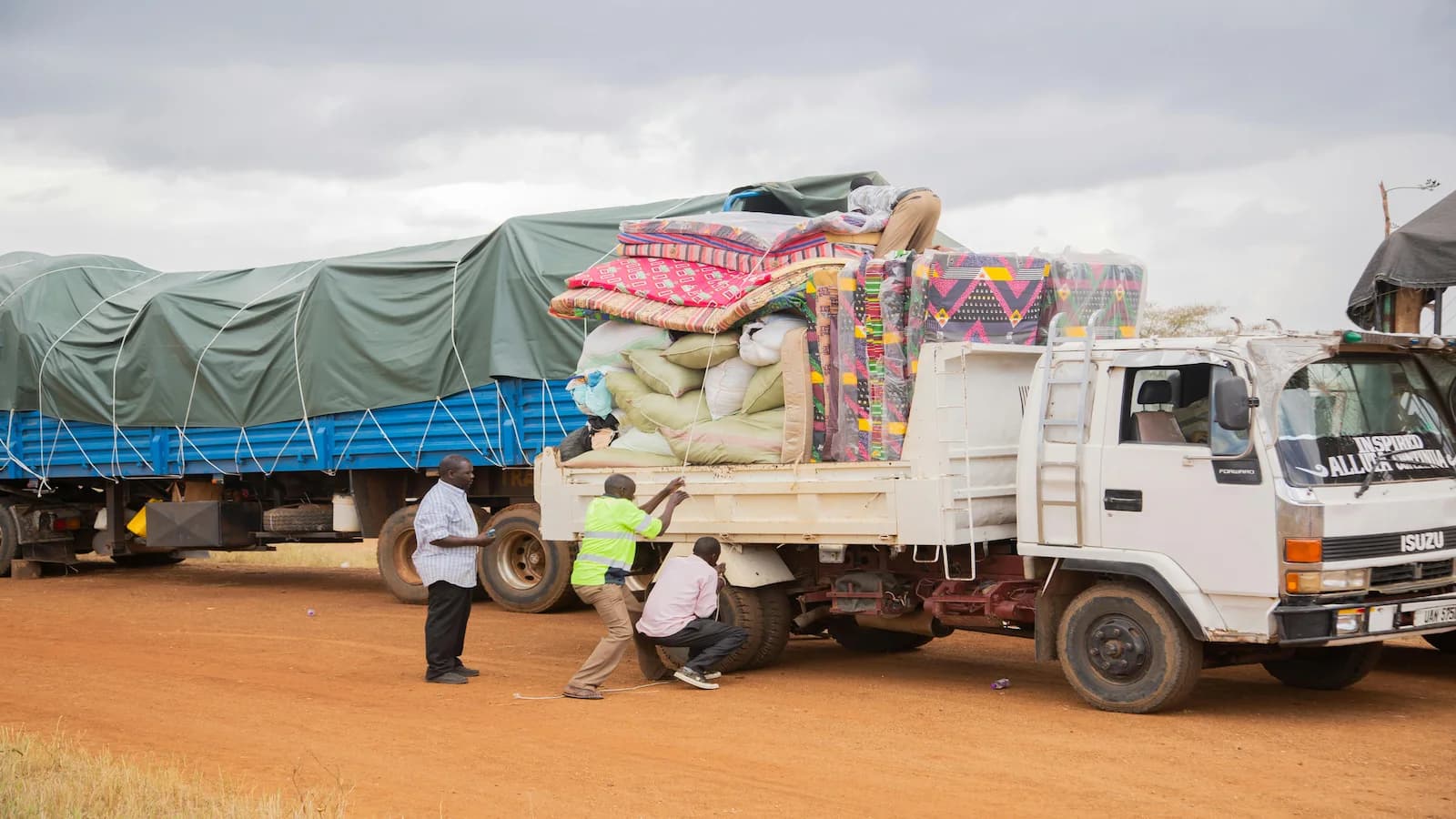
The single biggest factor. A cargo van costs a fraction of a 20-tonne truck. The five main categories — cargo van/pickup (up to 1 tonne), 3-tonne, 5-tonne, 10-tonne, and 20-tonne — each have different base rates. Specialised trucks (refrigerated, flatbed, tipper, tanker) carry premiums on top of size.
The most common pricing mistake we see: paying for a 10-tonne truck because "we might need the space" when you're moving 2 tonnes. You're not just paying for the truck — you're paying for the fuel to move that empty space.
2. Distance
Kilometre-based pricing is the foundation. Inside Kigali is shorter and cheaper. Cross-country runs to Rubavu, Huye, Rusizi, or Nyagatare cost more. There's also typically a minimum trip charge — even a 1-km move has a base cost because the driver and truck have to be there.
3. Fuel
Fuel is the volatile component of pricing. As of 2025, RURA set diesel pump prices around 1,757 FRW per litre in July, rising to roughly 1,900 FRW per litre by November. The price is reviewed every two months. When fuel moves, transport quotes move within days.
A useful rule of thumb: a sustained 10% rise in fuel typically translates to 4–6% rise in trucking rates. Your logistics partner should be transparent about how fuel is built into your quote.
4. Time of booking
Last-minute, off-hours, and weekend bookings carry small surcharges (typically 5–15%) because they require the platform to mobilise capacity outside normal patterns. Scheduled bookings — even 24 hours of notice — typically get the best base rates. If you can plan ahead, plan ahead.
5. Cargo type
Standard cargo is baseline. Premiums apply for:
- Fragile or high-value goods (requires careful handling, sometimes insurance riders)
- Refrigerated or temperature-controlled (specialised vehicle, fuel for refrigeration)
- Oversized or overweight (special permits, slower routing)
- Hazardous (regulatory compliance, specialised handling)
- Live animals (specific vehicle requirements)
If your cargo is anything other than "boxes on pallets," mention it upfront. Surprising the driver at pickup leads to surprise charges.
6. One-way vs round-trip
A one-way trip from Kigali to Rubavu still requires the truck to come back to Kigali, usually empty. That empty return leg is built into the quote, typically adding 20–40% to the one-way base. If you can fill the return leg — with returns, transfers, or backhaul — your effective rate drops significantly. The best logistics partners actively look for return-load opportunities to lower your cost.
What's typically included in a quote — and what isn't
A transparent quote should clearly include:
- Pickup at the agreed origin
- Standard loading time (usually 30–60 minutes)
- Drive to destination
- Standard offloading time
- Driver and truck for the duration
- Basic insurance (verify exact coverage)
- Real-time GPS tracking
- Digital proof of delivery
- Final invoice
A transparent quote should clearly exclude (and charge separately if needed):
- Loaders (if you don't have help at origin or destination)
- Excessive waiting time at either end
- Additional stops not specified at booking
- Cleaning fees for unusual or messy cargo
- Special permits, escorts, or other regulatory requirements
The single biggest red flag in Rwandan trucking quotes is the absence of detail. If a quote is just "150,000 FRW" with no breakdown of what's included, you should expect "extras" to show up at delivery.
How fuel changes affect your pricing
Diesel pricing in Rwanda follows a regular review cycle. RURA reviews prices every two months and publishes the maximum pump price. The price is influenced by:
- International oil prices from the previous period
- The cost of transporting fuel from Mombasa or Dar es Salaam to Kigali
- The Rwanda Franc exchange rate
- VAT and other taxes
For shippers, this matters because:
- Your transport rates may be revised when fuel revisions are significant
- Predictable framework contracts can include fuel-adjustment clauses that protect both sides
- One-off spot pricing tracks current fuel; framework rates may lag by a few weeks
Ask your logistics partner how they handle fuel adjustments. Good partners explain it in writing.
What you should pay — realistic ranges
We can't publish a rate card because real prices depend on the six factors above. But here's how to sanity-check any quote you get:
Inside-Kigali short trip (1–3 tonne, under 10 km): This should be a small, predictable number — broadly in line with a moderate ride-hail fare scaled up for the vehicle. If you're being quoted heavily for a short urban hop, something's off.
Inside-Kigali medium trip (5–10 tonne, 10–25 km): Several multiples of the short trip cost, scaling roughly with truck size.
Kigali to Rubavu/Musanze (10–20 tonne): A meaningful day's revenue for the truck owner — including the empty return leg. Round trips with return loads can be 20–40% cheaper on an effective basis.
Kigali to Rusizi (longest domestic route): Highest base because of distance and terrain. Best amortised over larger trucks and consolidated loads.
If you want hard numbers for your specific trip, get an instant quote at ironji.com/quote. It takes 60 seconds and you don't pay until you confirm.
How to get the best price
Six practical levers:
1. Right-size the truck. Pay for the capacity you need. A 5-tonne instead of a 10-tonne can cut your bill by 30–40%.
2. Schedule when you can. Even 24 hours of notice unlocks better rates.
3. Consolidate loads. Two shipments in the same direction can often share a truck. Ask.
4. Fill the return leg. If your destination has goods that need to come back, mention it. Round-trip pricing is often dramatically better.
5. Use framework agreements for recurring routes. Locked-in pricing beats spot pricing for predictable lanes.
6. Get quotes from real platforms. Avoid verbal estimates from one-off operators — they often change at delivery. Use ironji.com/quote for written, instant pricing.
The customers who consistently get the best logistics costs in Rwanda are the ones who plan, consolidate, and partner long-term. The customers who pay the most are the ones who treat every trip as a one-off emergency.
How to spot a bad quote
Red flags to watch for:
- No breakdown. A single number with no detail on what's included is hiding something.
- Verbal-only pricing. "We'll figure it out at delivery" is the most expensive sentence in logistics.
- Significantly below market. If a quote is 30% cheaper than three others, the driver is probably uninsured, the truck is in poor condition, or they're planning to add charges at delivery.
- No insurance details. Reputable operators tell you exactly what coverage applies.
- No tracking. If you can't see the truck, you're paying for blind spots.
- No proof-of-delivery process. Without a POD, you have no recourse for disputes.
Why framework pricing beats spot pricing for recurring routes
If you ship the same routes regularly — daily, weekly, or monthly — you should be on a framework agreement, not spot pricing.
Framework benefits:
- Locked-in rates for the contract period (3, 6, or 12 months)
- Reserved capacity so you don't compete for trucks on busy days
- Predictable monthly cost for budgeting and finance
- Service-level commitments in writing
- Performance reporting that helps you optimise over time
- Volume-based discounts as your volumes grow
Spot pricing makes sense for one-off, unpredictable, or low-volume needs. For anything regular, ask your logistics partner about a framework agreement.
How Ironji prices
Our pricing philosophy is built on three rules:
1. Quote upfront, in writing. No verbal estimates that change at delivery. Use ironji.com/quote.
2. Itemise what's included. No mystery line items at invoice time.
3. Match price to value. Right-sized trucks, vetted drivers, real-time tracking, proof of delivery, proper invoicing — all included.
For one-off bookings, you get an instant quote based on your specific trip. For recurring routes, we'll build a framework agreement that beats spot pricing and locks in service standards.
Frequently asked questions about logistics pricing in Rwanda
How much does it cost to hire a truck in Kigali?
Depends on size, distance, fuel, cargo, and timing. Get an instant quote at ironji.com/quote for accurate pricing for your specific trip.
Why is one quote so different from another?
Different operators include different things in the base price. Always ask for an itemised breakdown so you're comparing like-for-like.
Does the price include loaders?
Sometimes yes, sometimes no — always confirm at booking. Ironji can arrange loaders on request, with clear pricing upfront.
How often does fuel change pricing?
RURA reviews fuel prices every two months. Significant fuel changes typically flow into trucking rates within a few weeks.
Can I lock in a fixed price for a year?
Yes — through a framework agreement. Best for recurring routes and predictable volumes. Contact us at +250 783 889 601 to discuss.
Is round-trip cheaper than one-way?
Effectively yes, if you can fill the return leg. Logistics partners actively look for return loads to lower your cost.
What's the cheapest truck size for moving goods in Rwanda?
Cheapest per trip is a cargo van/pickup. Cheapest per kg often is the largest truck that's fully loaded — bigger trucks have lower per-kg costs when full.
How do I pay for logistics services?
Ironji bills via invoice with multiple payment options. You don't need cash on hand for drivers.