In every case, money is wasted, time is lost, and the next decision gets harder because trust in the estimate is shaky.
This is a practical guide to truck sizes in Rwanda — what each one is built for, what it can actually carry, what it typically costs, and the simple rules for picking the right one every time.
The five main truck categories in Rwanda
The Rwandan road-freight market uses five main truck categories, plus specialised vehicles. Knowing them by sight (and by their typical payloads) is one of the most useful logistics skills a business owner can build.
Cargo van / pickup (up to 1 tonne)
Small enclosed vans (Toyota HiAce style) or open pickup trucks (Hilux, Triton style). Best for:
- Documents and parcels
- Small e-commerce orders
- Single-pallet loads
- Restaurant supply deliveries
- Pharmacy and medical deliveries
- Single-item furniture or appliance moves
- Inside-Kigali short trips
Cheapest option, fastest dispatch, easiest to manoeuvre in narrow streets. Limited to small volumes — once you go over 1 tonne or you have bulky items, you need to step up.
3-tonne truck
Light commercial truck with a covered or open bed. Best for:
- Small distribution runs (5–15 retail outlets per trip)
- Wholesale-to-retail stock replenishment
- Small business relocations
- Light construction supplies (tools, lighter materials)
- Market trader bulk hauls
- Furniture and home moves up to a 2-bedroom apartment
The workhorse for SME logistics in Kigali. If your business doesn't know which truck size it usually needs, a 3-tonne is the right starting assumption for most B2B distribution work.
5-tonne truck
Medium commercial truck. Best for:
- Medium distribution loads (general trade routes)
- Bulk FMCG retail deliveries
- Building materials (cement, blocks, tiles in moderate quantities)
- Office relocations and larger home moves
- Inter-warehouse short hauls
The sweet spot for cost-per-kilogram on most Kigali-to-secondary-city routes. If you're moving full pallets or large quantities of medium-weight goods, 5-tonne almost always beats 3-tonne on unit cost.
10-tonne truck
Heavier commercial truck. Best for:
- Bulk goods (rice, maize, beverages in volume)
- Multi-pallet wholesale deliveries
- Construction materials in significant quantities
- Agricultural produce (potatoes, vegetables on inbound routes)
- Industrial inputs to manufacturing
- Full-truck-load Kigali to Rubavu, Musanze, Huye runs
The dominant truck size for inter-city distribution in Rwanda. Better fuel efficiency per kilogram than 5-tonne for long routes; capacity to absorb mixed loads with consolidation.
20-tonne truck (and larger)
Heavy commercial truck. Best for:
- Industrial cargo and raw materials
- Manufacturer-to-warehouse bulk moves
- Construction equipment and large materials
- Full container loads
- Long-distance heavy hauls
Generally requires scheduled booking (1–2 days notice) — these are not standing by on demand. Highest payload, best per-kilogram cost when fully loaded. Underused, they're expensive — they only make sense when the load justifies the size.
Specialised vehicles
Outside the five main categories, you'll find:
- Refrigerated trucks (cold chain) — dairy, frozen, fresh produce, pharma
- Flatbed trucks — long or wide items, vehicles, machinery
- Tipper trucks — sand, gravel, soil, aggregate
- Tankers — fuel, water, liquids
- Curtainsider trucks — easy side-loading for retail distribution
Specialised vehicles need to be booked in advance. Availability is thinner than the main five categories.
The right-sizing rule of thumb
Most logistics waste comes from one bad habit: people choose truck size by what feels safe, not by what the load actually needs. Here's a better rule:
Match truck size to actual load weight + 20% buffer.
Two examples:
- You're shipping 2 tonnes? Book a 3-tonne truck. (2 + 20% = 2.4, fits comfortably.)
- You're shipping 7 tonnes? Book a 10-tonne truck. (7 + 20% = 8.4, fits well; 5-tonne would be too tight.)
The 20% buffer accounts for cargo weight estimation error, packaging weight, and minor pickup additions. Beyond 20%, you're paying for empty air.
The flip side: don't try to squeeze a load into a too-small truck. Failed pickups, second trips, or driver disputes cost more than the right-sized truck would have.
Volume vs weight: the other dimension people forget
Truck capacity isn't just about weight — it's about volume (cubic metres). Light but bulky cargo can "weigh out" a 5-tonne truck on volume long before the actual weight limit. Examples:
- Empty plastic containers
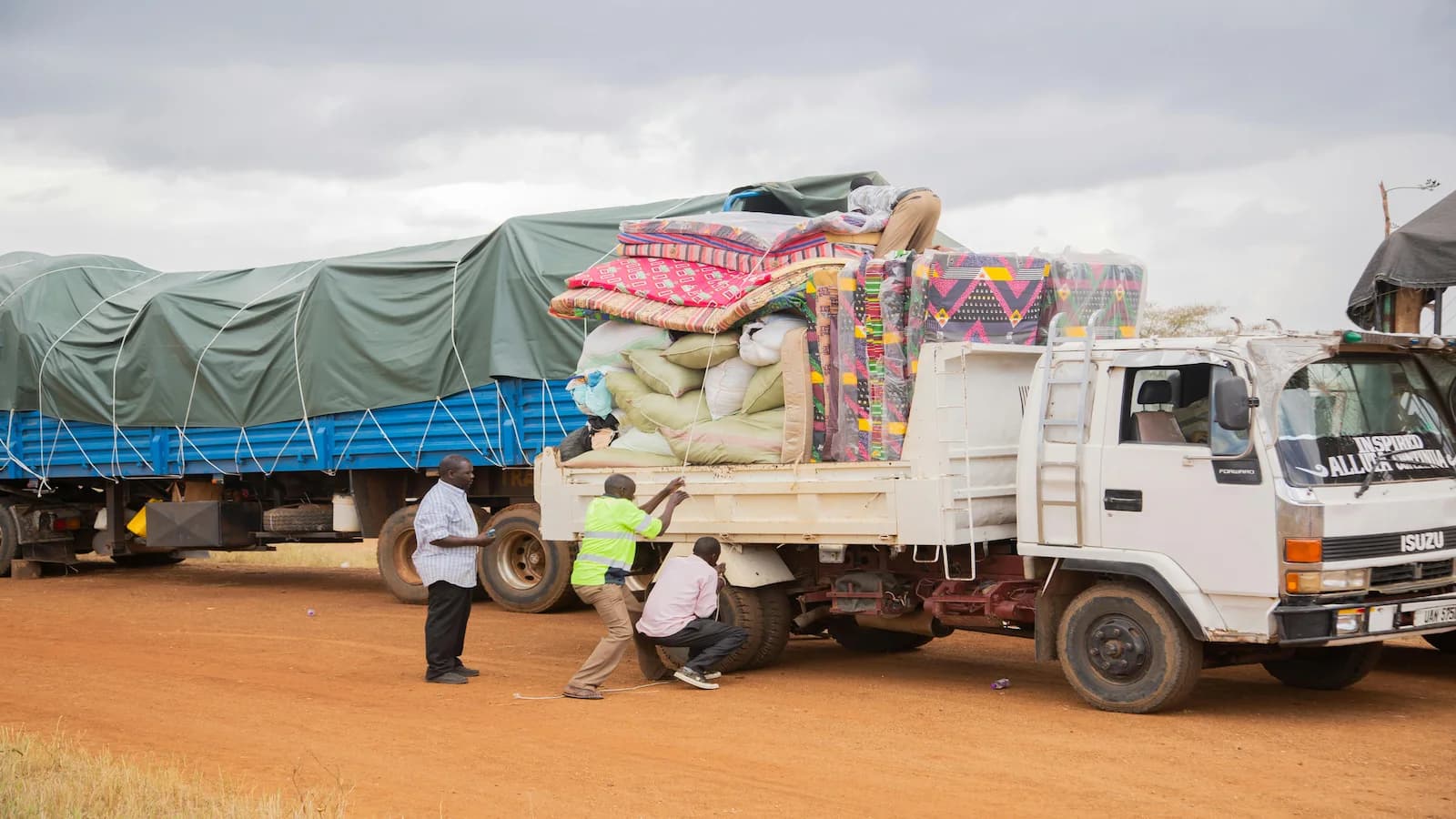
- Foam mattresses
- Insulation materials
- Bulk packaging
- Furniture in volume
For bulky cargo, ask about the cargo bed dimensions (length × width × height) of each truck size, not just the payload. A 10-tonne flatbed has very different volume capacity than a 5-tonne curtainsider. When in doubt, describe your cargo to the dispatcher and let them recommend.
Cost differential between truck sizes
Without quoting specific numbers (which change with fuel and route), here's how to think about relative cost:
- Cargo van → 3-tonne: roughly 1.5× to 2× per trip
- 3-tonne → 5-tonne: roughly 1.3× to 1.5× per trip
- 5-tonne → 10-tonne: roughly 1.5× to 1.8× per trip
- 10-tonne → 20-tonne: roughly 1.3× to 1.6× per trip
The key insight: cost-per-kilogram drops as truck size grows (when fully loaded). A fully loaded 10-tonne truck typically has the lowest per-kg cost; a half-loaded one is among the most expensive per-kg you can book.
Maximise fill rate, not minimise truck size. The two interact.
Practical scenarios — which truck would you book?
Let's walk through five common scenarios to build pattern recognition.
Scenario 1: Restaurant in Kacyiru needs same-day supplier delivery — 8 cases of beverages, 50 kg of produce, a single appliance crate. Total maybe 250 kg.
→ Cargo van. Volume more than weight is the constraint.
Scenario 2: Distributor moving 2.5 tonnes of cooking oil from a Kigali warehouse to 8 retail shops across the city.
→ 3-tonne truck. Good weight match; manageable for multi-stop routing.
Scenario 3: Furniture company shipping 4 tonnes of office furniture from a Kigali showroom to a new corporate client.
→ 5-tonne truck. Furniture is bulky, so the extra volume helps.
Scenario 4: Beverage distributor doing a weekly Kigali-to-Rubavu run with 8 tonnes of soft drinks for regional wholesalers.
→ 10-tonne truck. Better per-kg cost amortisation over the long route.
Scenario 5: Manufacturer shipping 15 tonnes of raw materials from Kigali to a factory expansion in Rubavu.
→ 20-tonne truck (book in advance). One trip beats two smaller ones on unit cost and operational simplicity.
Special considerations by sector
Different industries have different right-sizing rules of thumb.
FMCG distribution: 3-tonne for general trade, 5-tonne for hybrid routes, 10-tonne for modern trade and inter-city. Specialised refrigerated for cold chain SKUs.
Construction: Tipper for aggregate; 10- or 20-tonne for bulk materials (cement, steel); 5-tonne for tools and lighter materials between sites.
Agriculture: 10-tonne for bulk produce inbound from farms to processors; refrigerated for perishables; 5-tonne for distributing inputs (seeds, fertiliser).
E-commerce / last-mile: Cargo van for parcel runs; pickup for slightly larger items; 3-tonne for high-density route days.
Manufacturing: 10- and 20-tonne for raw materials and finished-goods bulk moves; 5-tonne for inter-warehouse small transfers.
Hospitality: 3- and 5-tonne for hotel and restaurant supply chains; refrigerated for fresh produce and beverages.
How to describe your load to a dispatcher
The faster you communicate the right info, the faster you get the right truck. Give them:
1. Estimated weight in kg or tonnes. Even a rough estimate.
2. Cargo type and packaging. "Twenty cartons of bottled water on a pallet."
3. Dimensions if cargo is unusual. "Long, 4 metres."
4. Pickup and destination addresses.
5. Any special requirements. Temperature, fragile, hazardous, oversized.
6. Loader requirement. Do you have help, or do you need loaders included?
A good dispatcher will translate that into the right truck size. If you're unsure, describe what you're moving in plain language; we'll handle the rest.
How Ironji helps you pick the right truck every time
Our dispatchers and on-platform quoting tool are designed to right-size your truck automatically. When you fill in a quote request at ironji.com/quote, you describe your cargo and we recommend the optimal truck size. If you're not sure, call us at +250 783 889 601 or message us on WhatsApp — describe the cargo and we'll size it for you.
Right-sized trucks save you money. Wrong-sized trucks waste it. We have no incentive to upsize you — bigger isn't better, well-matched is.
Frequently asked questions about truck sizes in Rwanda
What's the most common truck size in Kigali?
3-tonne and 5-tonne are the most-used for SME and general distribution work. 10-tonne dominates inter-city routes.
How heavy is a 5-tonne truck's payload?
About 5,000 kg of cargo. Different vehicle models vary slightly; always confirm specific payload when booking specialised loads.
Can a 10-tonne truck fit through Kigali's smaller streets?
Yes, but with care. Narrow residential streets are easier with 3- or 5-tonne. Discuss access constraints at booking.
What truck size do I need for moving house in Kigali?
A 1–2 bedroom home typically fits in a 3-tonne. A 3–4 bedroom home usually needs a 5-tonne. Larger homes or houses with significant garden/garage contents may need 10-tonne.
Should I always book the largest truck just to be safe?
No — that's the most common waste in Rwandan logistics. Use the right-sizing rule: actual load + 20% buffer.
How do I know if my cargo will fit in a specific truck?
Tell the dispatcher cargo dimensions and weight. They'll verify capacity match before dispatch.
What if my load is heavier than I estimated?
The driver may need to refuse the load or arrange an additional vehicle. Communicate carefully upfront. If you're unsure, slightly over-estimate weight when booking — but only slightly.
Do refrigerated trucks come in different sizes?
Yes. Refrigerated capacity is available across multiple truck sizes; book in advance because availability is thinner than standard trucks.